8 Sprints
Sustained team adoption
FLOWGEN · AI-NATIVE COORDINATION SYSTEM
From scope to coordinated execution.
Planning lived in documents. Execution lived in Jira. Urgency lived in Slack. FlowGen connected them into one reviewable workflow—from sprint planning to release.
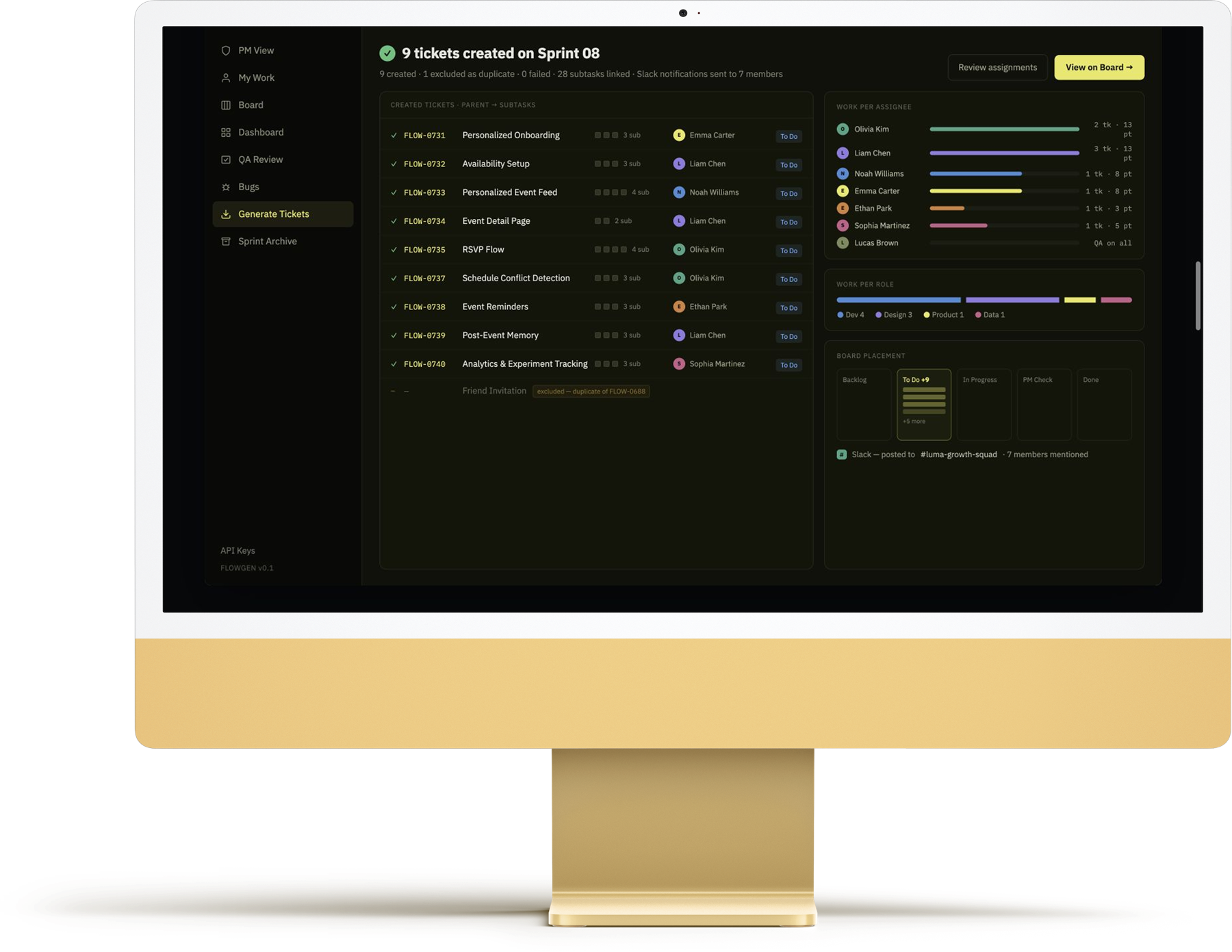
From planning input to reviewable execution.
Sustained team adoption
612 tasks · 257 bugs
PM · Design · Dev · Art
106 of 109 measured AI-assisted tickets
The team already had tools for documentation, ticket management, and communication. But every transition required someone to reinterpret the same information.
Every handoff created another opportunity to lose intent.
The same planning context had to survive every tool transition.
At first, the problem looked like ticket-writing overhead. But faster ticket creation would not solve clarifying ownership, requesting reviews, confirming fixes, or reorganizing unfinished work.
FROM ·→“How can we create tickets faster?”
TO · “How might we preserve intent and ownership from planning to release?”
Each transition depended on another message or manual interpretation.
One connected loop retained intent, ownership, review, and learning.
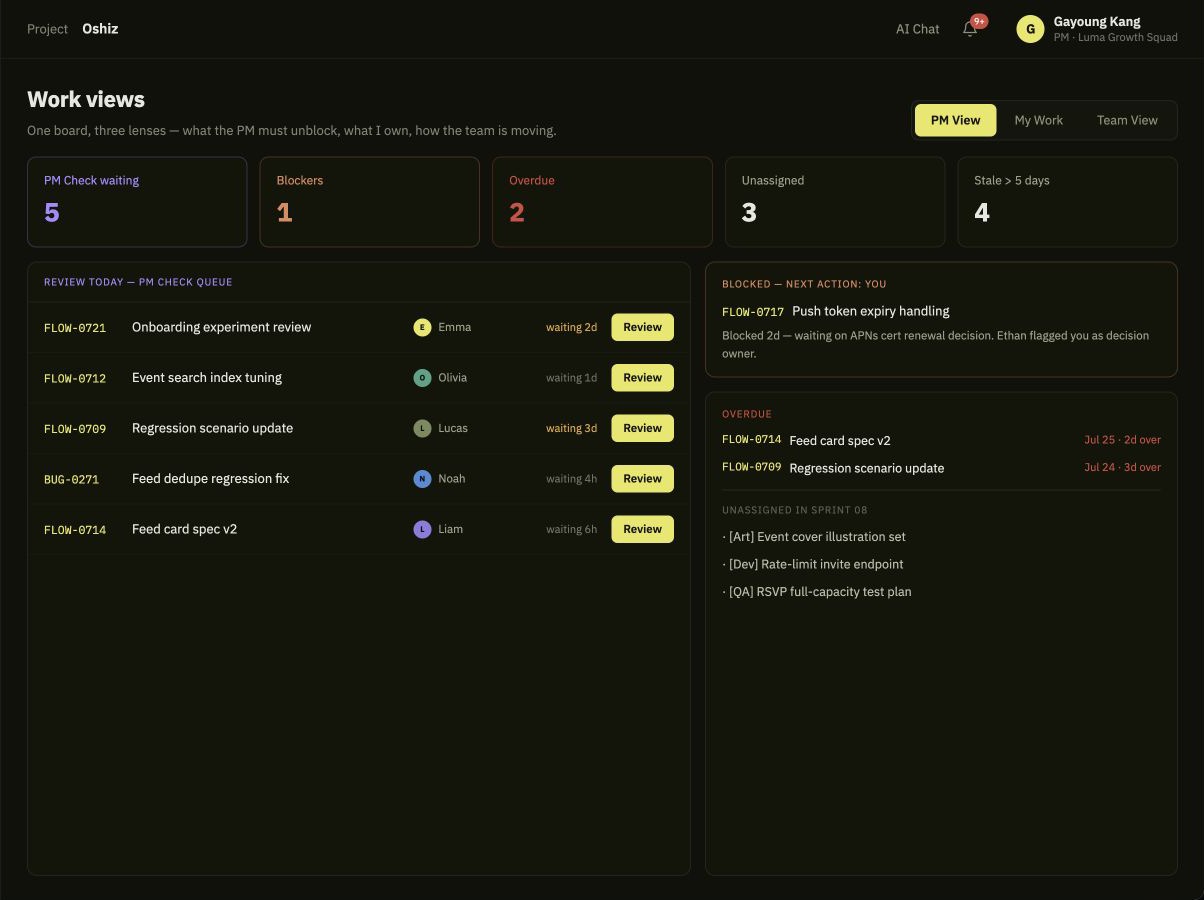
Blocked, overdue, unassigned, and waiting-for-review became visible states.
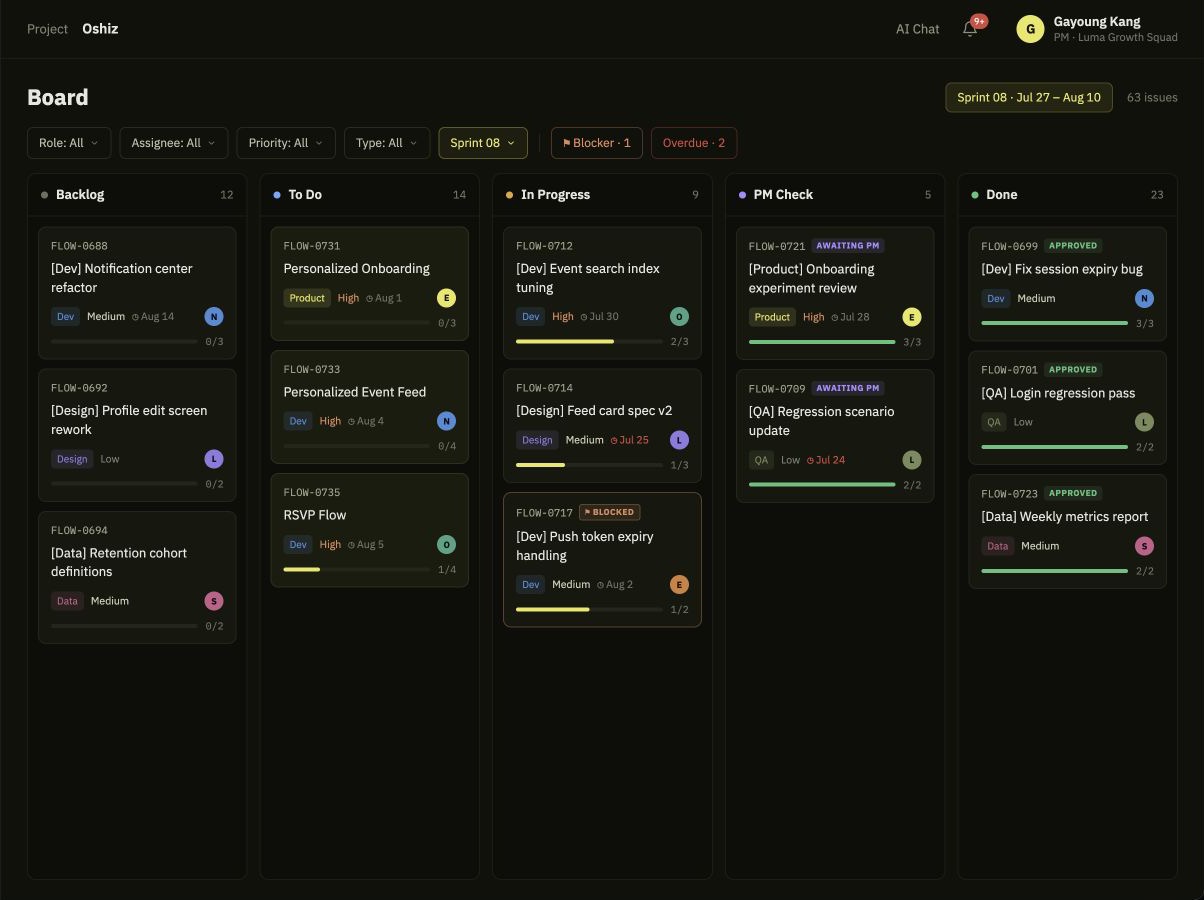
The board retained ownership and next action across the sprint.
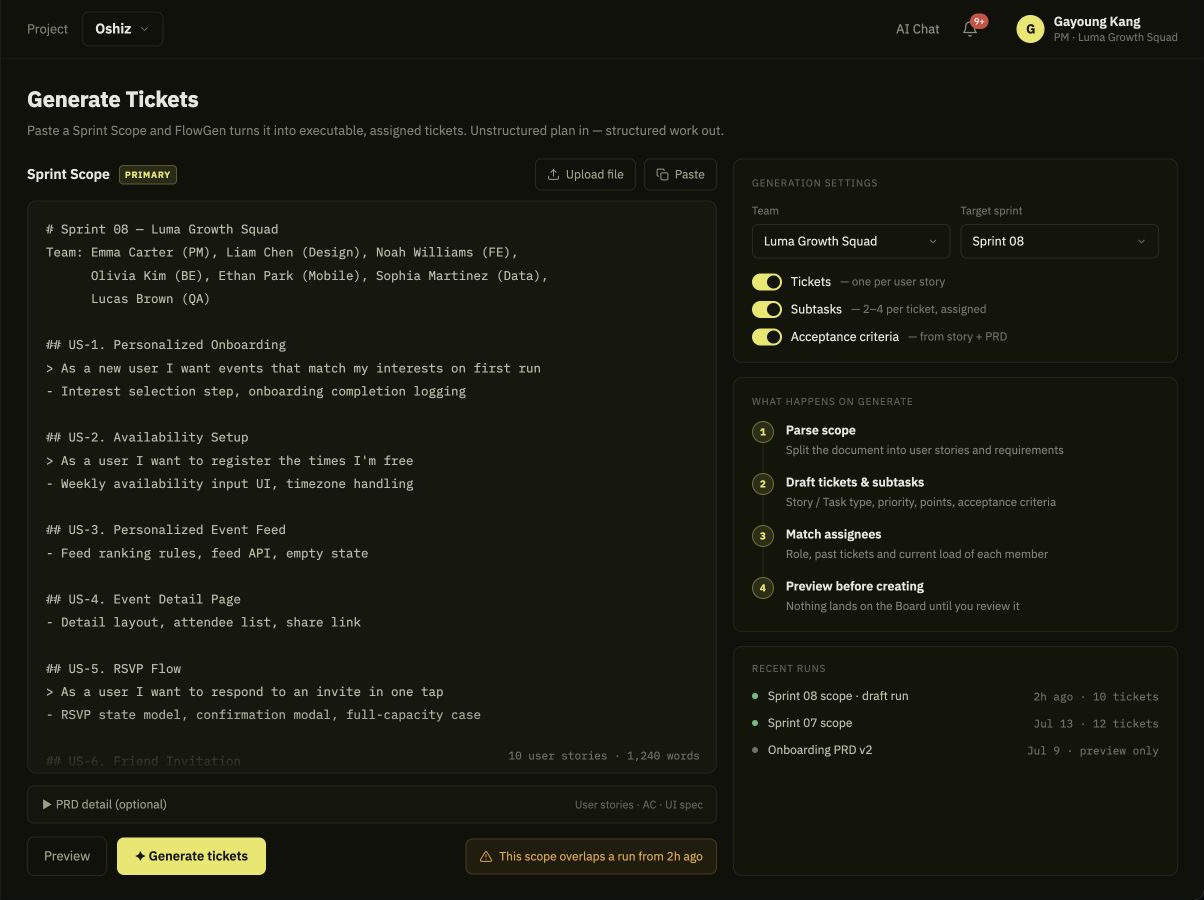
Sending an entire sprint document to an LLM was fast, but the resulting structure was difficult to reproduce and safely rerun. I separated deterministic workflow logic from probabilistic AI assistance.
Sprint scope input
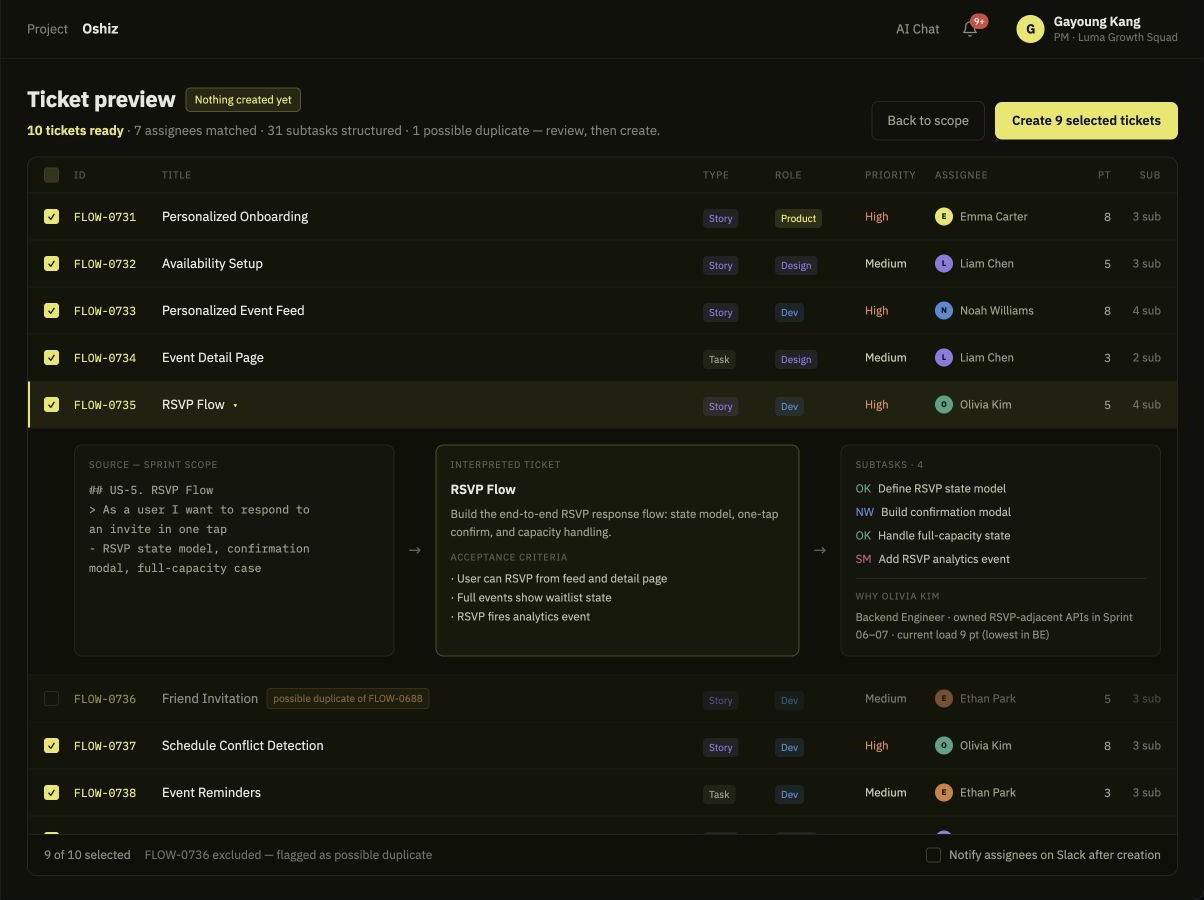
Source, interpreted ticket, assignee rationale, subtasks, and duplicate checks stay visible before creation.
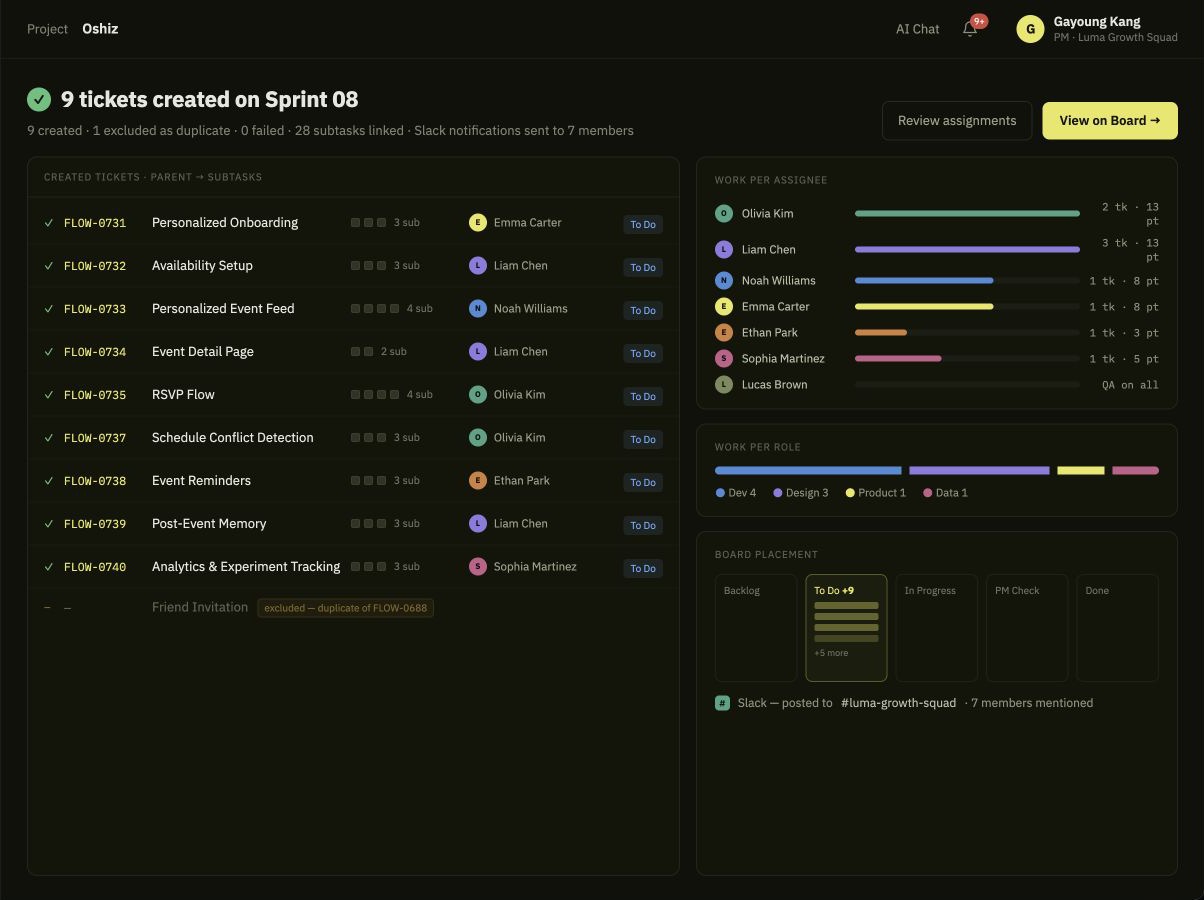
Approved work enters the system.
AI proposes. A person approves. Rules protect the structure.
A shared board could show where work was, but not always who needed to act next. I designed role-specific entry points and explicit PM and reporter review gates.
Review queues, blockers, overdue work, and next actions are grouped around the PM’s decision.
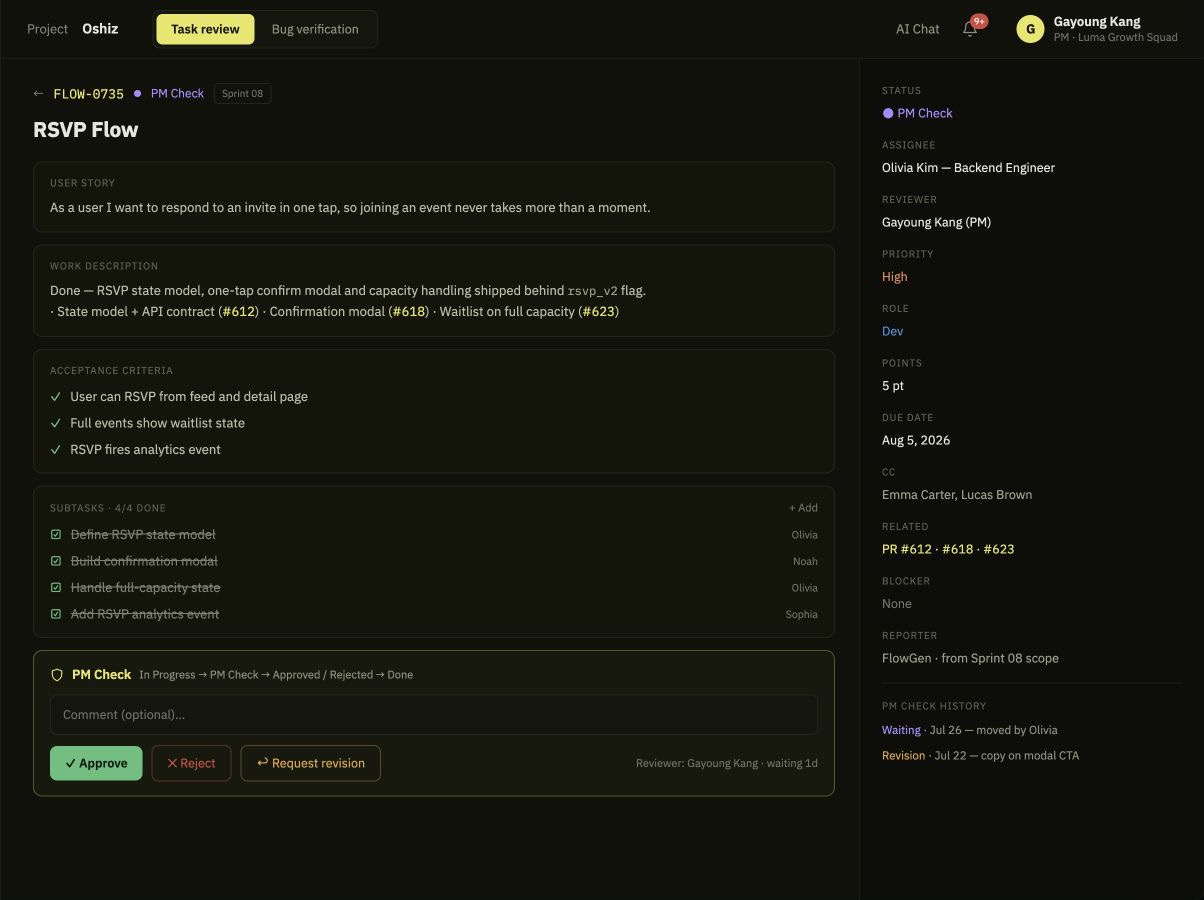
Acceptance criteria, subtask progress, reviewer, and sign-off remain attached to the ticket.
Where does the team need a decision?
What should I move next?
How is the sprint moving?
What context is required to act?
One ticket, four role-specific entry points, and one shared source of truth.
A card moving to Done was not enough. Bugs still needed a release version and verification, while unfinished work needed to move forward without losing its state or history.
Work advances with ownership and review state intact.
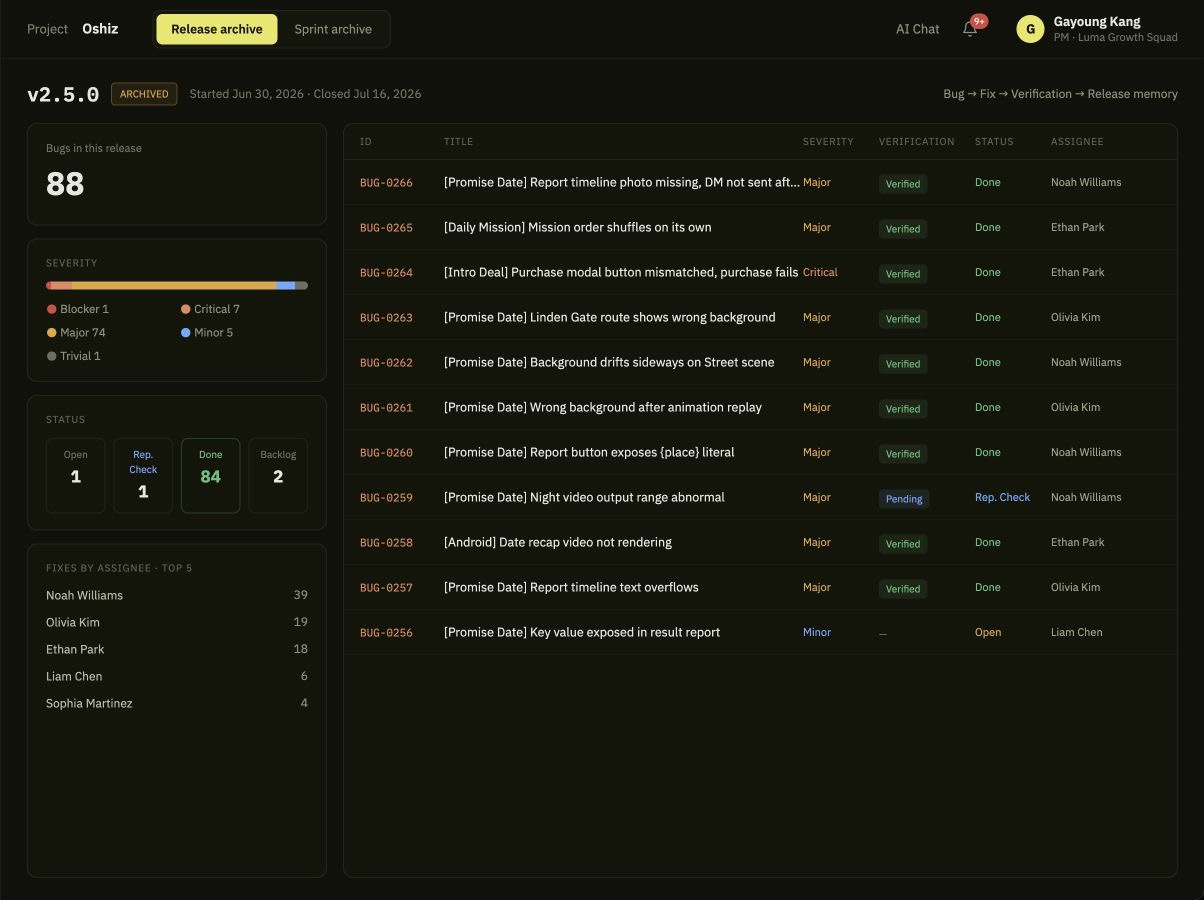
Release evidence is retained while unfinished work moves forward without losing history.
A bug is not complete until the release remembers it.
FlowGen became part of the team's workflow across eight sprints and 869 production tickets. It produced reviewable work structures, maintained visible ownership, and created an operational baseline for improving coordination over time.
The team continued operating in FlowGen.
612 tasks and 257 bugs managed in production.
Generated in 26.5 min—the largest measured scope-to-ticket batch.
106 of 109 measured AI-assisted tickets remained in use.
100% ownership coverage across closed S31–S35 tickets
These metrics do not claim that FlowGen made the team a specific percentage faster. They show sustained workflow adoption and structured work the team continued to use.
The archive is evidence of an operating workflow—not a claim that its sample counts caused the reported outcomes.
It means knowing where uncertainty creates value, where consistency is essential, and how people can review and recover from automated decisions.
FlowGen taught me to design AI as one participant in a larger system—not as the system itself.FlowGen makes team dependencies visible. OSHIZ applies the same systems thinking to a consumer challenge: making memory, world, and relationship continuity visible to users.